



Children grow. Sometimes slowly and predictably. Sometimes it seems like they wake up one morning two inches taller and suddenly none of their clothes fit. For children who wear pediatric prosthetics, growth means more than buying bigger shoes and longer pants. It can change the way the prosthesis fits, how the child walks, the overall height of the prosthesis, and how comfortably the child can perform everyday activities.
Unlike an adult whose body dimensions may remain relatively stable for long periods, a child’s prosthetic needs continually change as their body develops.
The Amputee Coalition notes that because children grow rapidly, their prosthetic devices may need to be frequently readjusted or replaced. That does not mean a child needs an entirely new prosthesis every time they grow.
Sometimes an adjustment is enough. Sometimes a component can be changed. Sometimes the prosthesis can be lengthened. And sometimes the child has simply outgrown the socket and it is time to make another one.
The important part is recognizing the signs.
Children Don’t Just Grow Taller
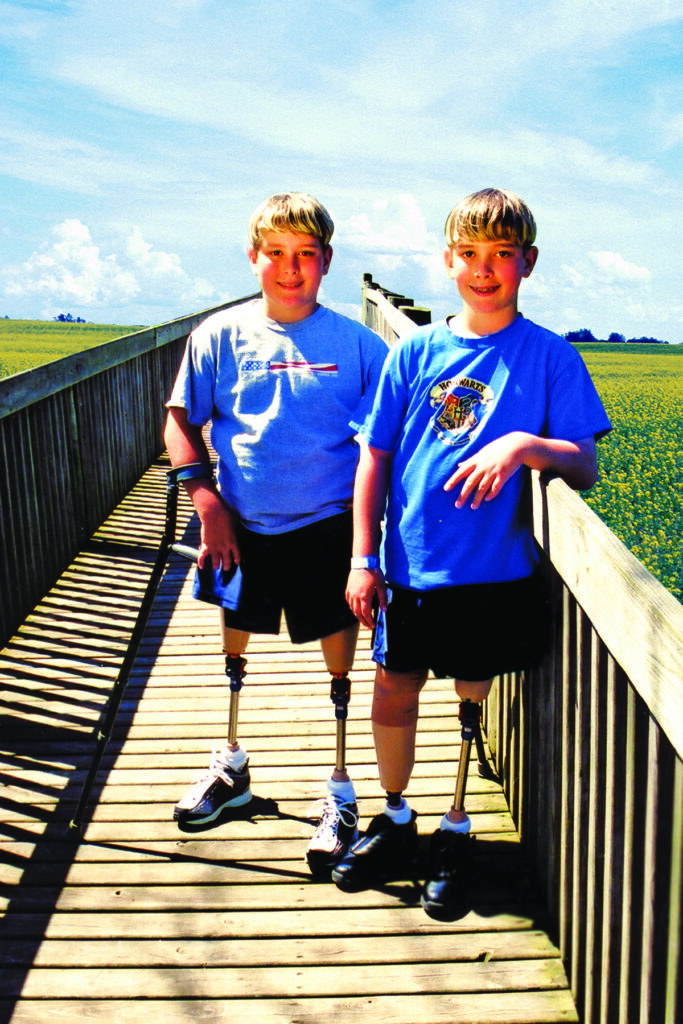 When we think about growth, height is usually the first thing that comes to mind. But a growing child is changing in several ways at the same time.
Their residual limb can change in:
- Length
- Circumference
- Shape
- Muscle development
- Soft-tissue distribution
- Strength
The rest of their body is changing too.
Their opposite leg is getting longer. Their feet may grow. Their hips and pelvis develop. Their weight changes. Their balance improves. Their strength increases. And the activities they want to participate in become more demanding.
Research on pediatric prosthetic provision has found that physical growth can create both socket-fit problems and prosthetic length discrepancies, making ongoing follow-up especially important during childhood.
A prosthesis that fit correctly several months ago may therefore need attention even if nothing is technically “broken.” The child may simply have grown.
How Does a Child Outgrow a Prosthetic Socket?
The socket is the part of the prosthesis that interfaces directly with the child’s residual limb. That makes fit extremely important.
As the residual limb grows, an existing socket can become too tight or no longer match the child’s anatomy appropriately. Parents may notice that the prosthesis becomes harder to put on or that the child begins complaining about discomfort in areas that never bothered them before.
Possible signs of an increasingly tight socket can include:
- New areas of redness
- Pressure marks that were not present previously
- Skin irritation
- Difficulty getting fully into the socket
- Complaints that the prosthesis feels tight
- Changes in suspension
- Pain while walking
- Reluctance to wear the prosthesis
- Changes in walking pattern
For younger children who may not be able to clearly explain what feels wrong, behavior can sometimes provide an important clue. A child who normally puts on their prosthesis without a problem but suddenly begins avoiding it may be trying to tell you something.
Research into pediatric prosthetic fitting emphasizes that socket design must manage contact and loading carefully while minimizing friction and other undesirable forces on the residual limb. If the fit has changed, simply telling a child to “get used to it” is not the answer. The socket should be evaluated.
What If the Prosthesis Becomes Too Short?
One of the easiest growth-related problems to overlook is prosthetic height. Your child’s natural leg continues growing. The prosthesis does not.
Eventually, a lower-limb prosthesis that was the correct length when it was delivered may become relatively short compared with the child’s other leg. This is sometimes called a prosthetic length discrepancy. Recent research examining pediatric prosthetic care specifically identified prosthetic length discrepancy as one of the challenges created by children’s physical growth.
Parents may notice:
- One side of the pelvis appearing lower
- The child seeming to “drop” onto the prosthetic side
- A new limp
- Uneven step lengths
- Changes in balance
- The child saying one leg feels shorter
- Changes in posture
- More effort while walking
Children are incredibly good at adapting. Sometimes that is helpful. Sometimes it allows them to compensate for a problem so well that adults do not immediately notice it. That is one reason routine prosthetic follow-up matters even when a child is not complaining.
Can a Prosthesis Be Lengthened as a Child Grows?
In many situations, yes.
Lower-limb prostheses are often designed with the expectation that some growth will occur. Depending on the child’s prosthesis, there may be options to adjust the length without replacing the entire device. A prosthetist may be able to make changes using different adapters, pylons, component adjustments, or other modifications.
Exactly what can be changed depends on:
- The child’s amputation level
- The prosthetic design
- Available component space
- The child’s size
- The amount of growth
- Component limitations
- Alignment requirements
There eventually comes a point where continually modifying an existing prosthesis may no longer be appropriate. That is when a more significant change may be necessary.
Growth Can Change Prosthetic Alignment Too
Getting taller is not simply about adding length to the bottom of a prosthesis. The entire relationship between the child and the prosthetic components needs to remain appropriate. As the child grows, changes may be needed to maintain proper alignment.
Alignment affects how the prosthesis responds while the child:
- Stands
- Walks
- Runs
- Climbs stairs
- Plays
- Changes direction
- Participates in sports and recreation
A prosthetist should evaluate more than whether the top of the child’s hips appears level. We also need to see how the child moves. Sometimes a parent notices the change first.
You may think: “They didn’t used to walk like that.” That observation is worth mentioning.
A Growth Spurt Can Seem to Happen Overnight
Children do not always grow at a perfectly steady rate.
There may be periods when very little seems to change followed by a noticeable growth spurt. That means there is no universal calendar saying every pediatric prosthetics user needs a new socket after a specific number of months.
Recent research on pediatric prosthetic provision emphasizes that growth affects children differently depending on their level of limb absence and individual circumstances.
The right answer is regular evaluation and paying attention to changes. Some children may require adjustments sooner than others. The prosthesis needs to follow the child rather than expecting the child to conform to a predetermined replacement schedule.
The Child’s Activity Level Changes Too
Physical growth is only part of the story. A three-year-old and a thirteen-year-old may both use lower-limb prostheses, but what they expect those prostheses to do can be completely different.
As children develop, they may progress from:
Walking across the living room
to running around the playground
to playing organized sports
to working their first job.
Their strength, coordination, confidence, speed, and interests can change dramatically.
The Amputee Coalition emphasizes that children need time to learn to use a prosthesis and adapt to it as they develop. Prosthetic planning therefore needs to consider more than physical size. The prosthetist should also understand what the child is trying to do.
Sometimes the Prosthesis Isn’t Too Small — the Child Has Simply Become More Capable
This distinction is important. Suppose a child received a prosthesis when they were first learning to walk. Several years later, that same child may want to:
- Run
- Jump
- Play basketball
- Ride a bike
- Go hiking
- Participate in gym class
- Play with friends
- Try a new sport
Their prosthetic needs may change because they have changed, even beyond physical growth.
Pediatric prosthetic research has long emphasized matching prosthetic components, techniques, and socket designs to the changing developmental needs of the child rather than treating the prosthesis as a static device. That is why conversations about goals are important during pediatric prosthetic appointments. Ask your child what they want to do. Their answer might surprise you.
Don’t Ignore Skin Changes
Parents should regularly look at the child’s residual limb, particularly when growth is occurring. Some temporary redness immediately after removing a prosthesis can occur from normal socket contact, but persistent redness, sores, blisters, or skin breakdown should not simply be ignored.
Pay attention to:
- New pressure areas
- Blisters
- Open areas
- Persistent redness
- Swelling
- Painful spots
- Changes around scars
- Areas where the socket edge is rubbing
A growing child may not always understand that discomfort means something needs to be adjusted. Some children simply assume wearing a prosthesis is supposed to hurt. It shouldn’t.
If something looks different, call your prosthetist.
Watch the Child Walk
 Parents see their children far more often than their prosthetist does. That makes you an important part of the prosthetic team.
Every once in a while, watch your child walk from behind and from the side. You do not need to perform a professional gait analysis. Just look for changes.
Does one side suddenly seem shorter? Are they leaning more? Are they tripping more often? Has their foot started turning differently? Are they taking uneven steps? Do they seem less confident? Are they avoiding the prosthesis? Has an activity that used to be easy become difficult?
If your answer is yes, schedule an evaluation.
Sometimes the cause may be growth. Sometimes it may be the socket. Sometimes it may be alignment or a component. And sometimes it may have nothing to do with the prosthesis at all.
The point is to find out.
A Child May Not Tell You Their Prosthesis Doesn’t Fit
Adults tend to be fairly direct when something hurts. Children can be different. A younger child may not have the vocabulary to describe socket pressure. An older child may simply not want another appointment.
They may say: “It’s fine.” Meanwhile, they are limping across the kitchen like the prosthesis is three sizes too small. Parents should pay attention to behavior as well as words.
Possible warning signs include:
- Suddenly wearing the prosthesis less
- Wanting to be carried more often
- Avoiding certain activities
- Complaining about walking
- Repeatedly adjusting the prosthesis
- Taking the prosthesis off earlier than usual
- Increased falls or trips
- New complaints about pain
Kids can be tough. Sometimes too tough.
Not Every Growth Change Means a Whole New Prosthesis
This is important for parents to understand. When your child grows, there are several possible solutions. Depending on what has changed, the prosthetist may recommend:
- A socket adjustment
- Changes to padding
- Suspension adjustments
- Prosthetic length adjustment
- Alignment changes
- Replacement of worn soft goods
- Replacement of an individual component
- A new socket
- A new prosthesis
The goal is not to replace more than necessary. The goal is to make sure the prosthesis remains safe, comfortable, functional, and appropriate for what the child needs.
Regular Follow-Up Is Especially Important for Pediatric Prosthetics Users
Adults sometimes go long periods without needing major prosthetic changes. Children are different. Their bodies are continuously developing, and the Amputee Coalition specifically notes that the rapid growth of children creates unique considerations in prosthetic care and can require frequent readjustment or replacement.
Regular appointments allow your child’s prosthetist to evaluate:
- Socket fit
- Prosthetic height
- Alignment
- Skin condition
- Suspension
- Component condition
- Walking pattern
- New activities
- Developmental changes
- Overall comfort
You do not have to wait until your child has completely outgrown the prosthesis. In fact, it is better not to.
Let the Prosthesis Grow with Your Child
 A child’s prosthesis is not something that can be made once and expected to remain unchanged throughout childhood. Children grow. They get stronger. They become more adventurous. Their interests change. Their bodies change. And their prosthetic care needs to change with them.
At Leimkuehler Orthotic-Prosthetic Center, we understand that pediatric prosthetic care is an ongoing process. Our goal is to work with children and their families as they grow, helping make sure their prosthesis continues to fit properly and supports the activities that matter to them.
If your child has experienced a growth spurt, their prosthesis seems too short, the socket has become uncomfortable, or you simply feel like something has changed, schedule an appointment with one of our prosthetists.
You know your child. If something suddenly looks or feels different, it is worth taking a look. Because kids shouldn’t have to slow down just because they’ve outgrown their prosthesis.