


In today’s world, it’s easy to assume that newer technology automatically means better results.
When it comes to prosthetic sockets, that assumption can lead people in the wrong direction.
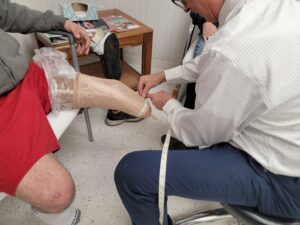
At Leimkuehler Orthotic-Prosthetic Center, hand casting is still a core part of the process—and there’s a reason for that.
The Socket Is the Foundation of Everything
The socket is the connection between your body and the prosthesis.
If that connection isn’t right, nothing else matters.
Even the most advanced prosthetic components won’t perform the way they should if the socket is:
• Uncomfortable
• Unstable
• Poorly aligned
A properly designed socket leads to better comfort, better control, and better overall outcomes.
What Hand Casting Actually Provides
Hand casting allows a prosthetist to do more than just capture shape—it allows them to understand how your limb responds to pressure.
During the process, they can:
• Feel how soft tissue moves
• Identify areas that can tolerate weight
• Recognize sensitive areas that need relief
• Make small adjustments in real time
This hands-on approach creates a level of precision that goes beyond what a scan alone can provide.
Why Pressure Distribution Matters
A common misconception is that a socket just needs to match the shape of the limb.
In reality, it’s about how pressure is distributed.
Some areas of the limb are designed to carry more load. Others are not.
Hand casting allows the prosthetist to guide that pressure intentionally, which leads to:
• Fewer pressure points
• Less discomfort
• Better stability
The Limitations of “Faster” Methods
Digital scanning can be efficient, but efficiency isn’t the same as accuracy.
When used without a hands-on approach, scanning can miss:
• Subtle differences in tissue density
• How the limb reacts to compression
• Areas that need precise offloading
That often leads to more trial and error later in the process.
Why Experience Still Wins
Technology can support the process, but it doesn’t replace experience.
At Leimkuehler, hand casting is combined with years of clinical experience to create a socket that works with the body—not against it.
Final Thought
When it comes to something as important as the fit of your prosthesis, precision matters. Taking the time to get it right from the beginning leads to better comfort, fewer adjustments, and a smoother path forward. Contact us today to get started.